
Neck discomfort after scrolling: what can you change?
“Physiotherapy, strength and movement education—without reducing your body to one painful spot.”
Review pending: Editorial draft prepared for Nishika Singh’s review. The linked reel’s audio and captions have not been verified; this article is not a transcript or a statement of her clinical advice.
Quick answer
Start by making the screen easier to see, supporting your arms where practical, and changing position during long sessions. Neck discomfort has several possible causes; noticing it after scrolling does not establish a diagnosis. If it persists or concerns you, seek an individual assessment.
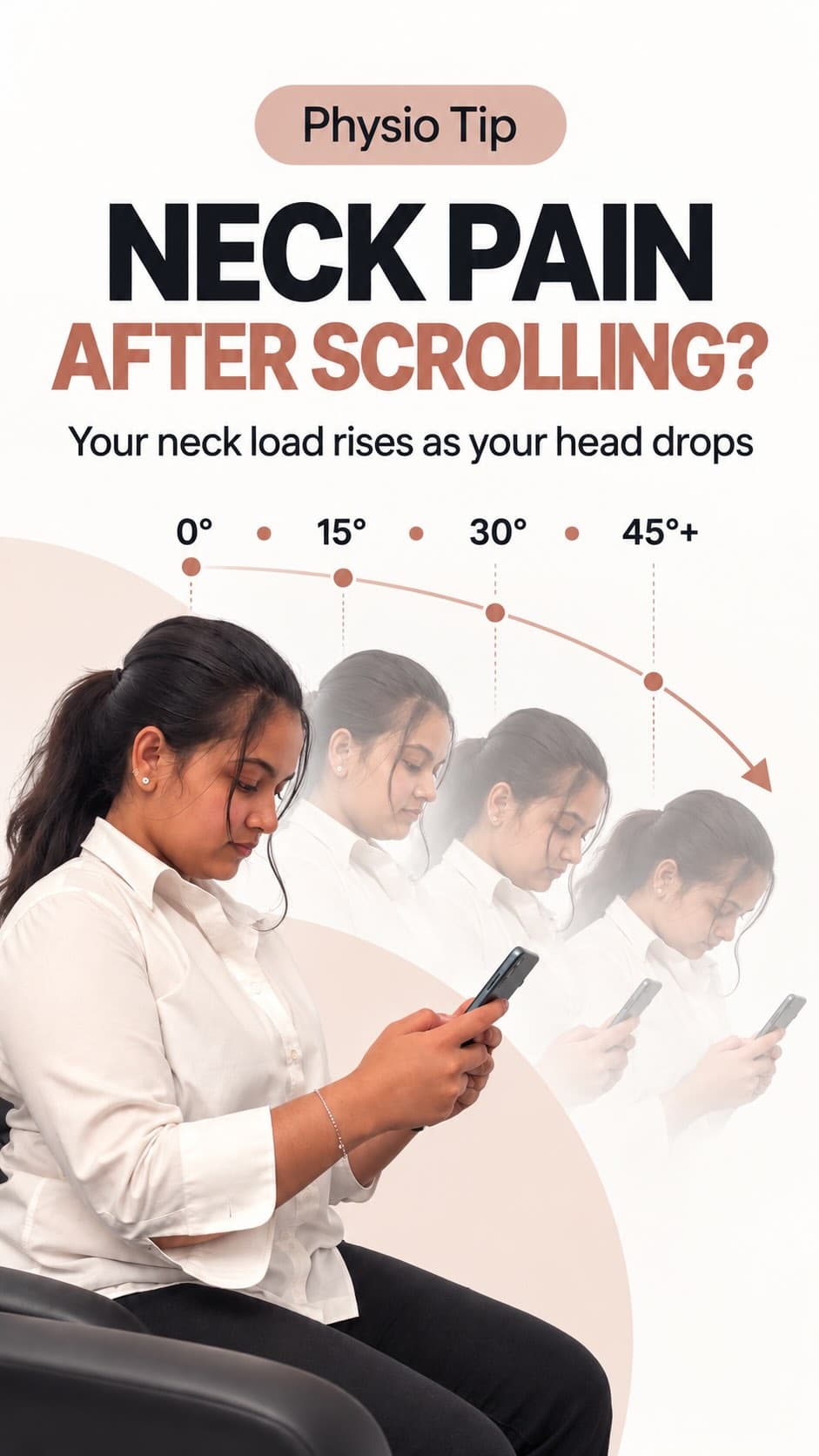
Why look beyond the angle of your head?
A useful starting question is not simply “Am I looking down?” but “What happens during this task?” Note how long you scroll, whether you lean to read small text, and whether symptoms also appear away from your phone. Treat these observations as information to discuss, rather than proof that one position has damaged your neck.
What can you change about your screen?
For computer work, CCOHS recommends placing the main monitor in front of you and choosing a viewing distance that lets you read comfortably. Corrective lenses may affect the most comfortable height. Its guidance is a starting point for individual adjustment, not a rigid position everyone must maintain.
A practical observation plan
During your next ordinary screen session, notice when discomfort first appears. Try one manageable change: larger text, a different screen position, arm support, or a pause from the task. Record what felt more or less comfortable. This is an editorial suggestion for organising observations, not a tested treatment protocol.
Does looking down mean my neck is being injured?
This article cannot determine the cause of your symptoms from an angle or a photograph. Online load figures are not a personal assessment. Discuss your symptoms, activity demands and concerns with a clinician instead of using a single number to predict injury.
When should I seek help?
The NHS advises seeking medical advice if neck discomfort remains after a few weeks, worries you, or comes with symptoms such as pins and needles or a cold arm. This article does not replace a clinical assessment. Use the appropriate local healthcare service for your situation.
What should I tell a physiotherapist?
Bring a short description of your symptoms, when they began, activities that bring them on, and changes you have tried. You can also explain what you want to return to doing. A useful conversation starts with your experience, not a demand to hold a perfect posture.
Related reel
Watch the related Instagram reel. Topic mapping comes from the project’s reel catalogue and must be checked against the original recording before publication.
Sources and further reading
Sources checked on 3 October 2026. These sources support the explanations above; they do not verify the reel or establish an individual diagnosis.
Need an individual assessment and recovery plan?
Nishika provides hands-on orthopedic care, spinal rehabilitation, and posture screening at Physiocare Physiotherapy (South Keys, Ottawa). Book directly online in minutes.

Nishika Singh
· Registered PhysiotherapistPhysiotherapy, strength and movement education—without reducing your body to one painful spot. Practicing in Ottawa, Ontario at Physiocare Physiotherapy (South Keys).