
Core bracing and breathing: do you need to squeeze all day?
“Physiotherapy, strength and movement education—without reducing your body to one painful spot.”
Review pending: Editorial draft prepared for Nishika Singh’s review. The linked reel’s audio and captions have not been verified; this article is not a transcript or a statement of her clinical advice.
Quick answer
Core bracing is an exercise strategy, not an instruction to keep your stomach maximally tight all day. The cue should fit the movement and effort involved. If a cue makes an ordinary task feel rigid or interrupts your breathing, ask a qualified coach to help you adjust it.
What does “brace your core” actually mean?
ACE describes bracing as engaging the abdominal wall and explains that the response to a cue matters more than the words themselves. It cautions that excessive contraction can restrict breathing and movement. Bracing is therefore something to learn in context, rather than a universal command to squeeze harder.
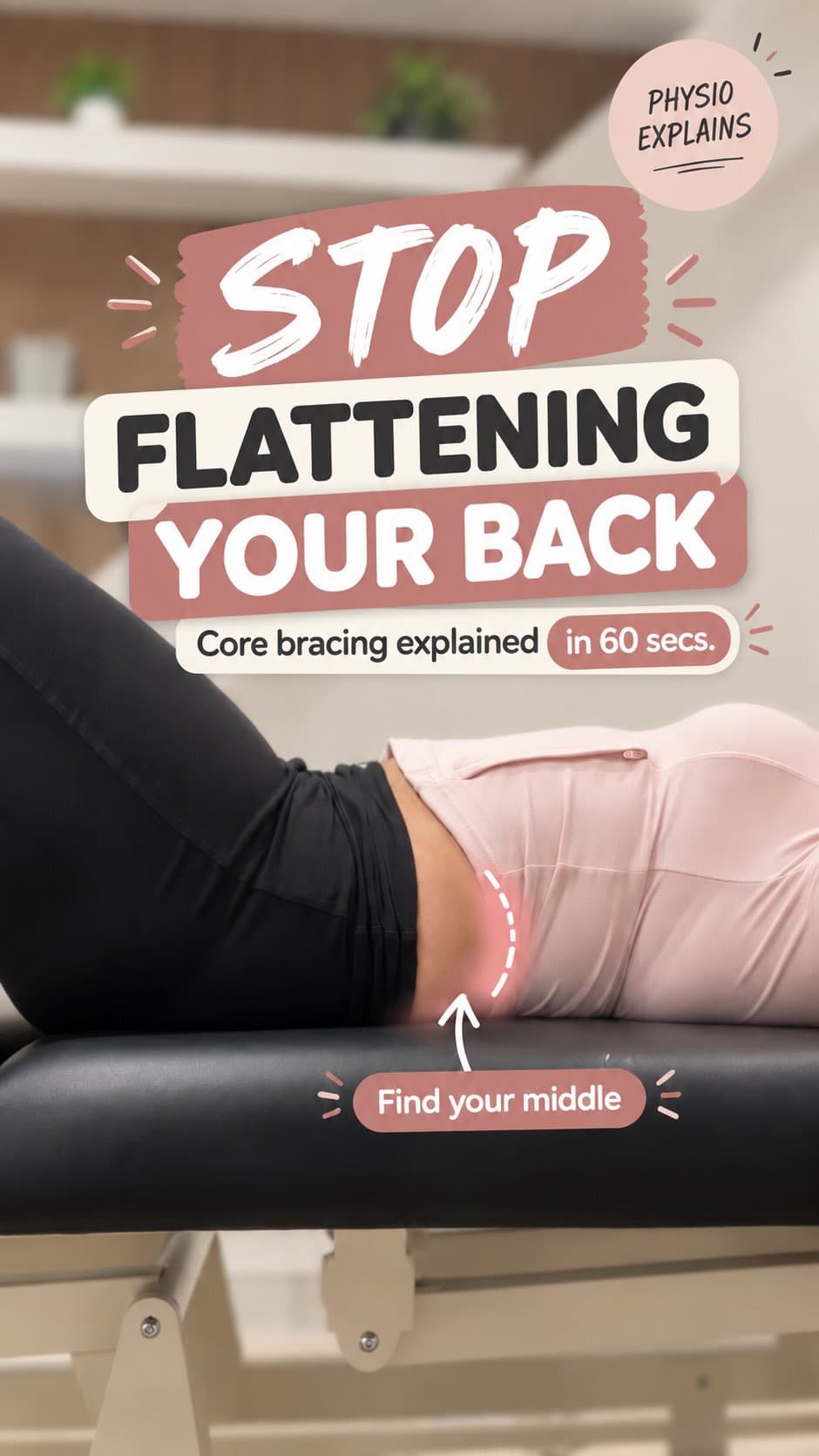
Why distinguish bracing from flattening your back?
A cue about abdominal engagement is not automatically a cue about the exact shape of your back. Ask your coach what the instruction is intended to help with in this particular exercise. A useful explanation should make the task clearer, without suggesting that every other position is unsafe.
Do I need the same cue for every movement?
ACE distinguishes higher-demand stability strategies from movements that need more freedom between body regions. The amount of effort and the task matter. This does not establish one breathing technique or posture as correct for every person, exercise or load.
Questions to bring to your next training session
Ask: What should this cue change? How much effort do you want? How should I breathe during this version? What should I do if it hurts? These questions turn a vague instruction into a discussion about the actual movement. They are an editorial checklist, not a prescribed exercise routine.
Should beginners practise holding their breath?
This article does not prescribe breath-holding or a heavy-lifting breathing technique. Choose an exercise and load you can practise with appropriate guidance. If you have a health concern or are unsure whether a technique is suitable, get individual advice before following an online demonstration.
Is core bracing a treatment for back pain?
This draft does not claim that bracing prevents every injury or treats every cause of back pain. If pain is the reason you are changing how you move, a training cue alone is not an assessment. Discuss the concern through the appropriate clinical service.
Where does personal training fit?
A training session can give you time to ask questions, practise a specific movement and adjust its difficulty. Clinical physiotherapy and personal training are distinct services. Use the service information page to understand the booking routes before making an enquiry.
Related reel
Watch the related Instagram reel. Topic mapping comes from the project’s reel catalogue and must be checked against the original recording before publication.
Sources and further reading
Sources checked on 3 October 2026. These sources support the explanations above; they do not verify the reel or establish an individual diagnosis.
Need an individual assessment and recovery plan?
Nishika provides hands-on orthopedic care, spinal rehabilitation, and posture screening at Physiocare Physiotherapy (South Keys, Ottawa). Book directly online in minutes.

Nishika Singh
· Registered PhysiotherapistPhysiotherapy, strength and movement education—without reducing your body to one painful spot. Practicing in Ottawa, Ontario at Physiocare Physiotherapy (South Keys).